

Rock revetments do more than look rugged; they are a key element of preventing erosion and land reclamation. The umbrella term rip rap encompasses a range of stone sizes and materials arranged to absorb energy and resist movement. Choosing the right type is part science, part logistics—balancing wave force or flow velocity against stone weight, angularity, bedding layers, and site access. Get those pieces right and your shoreline, culvert, or embankment becomes a long-lived system rather than a short-term fix. This guide breaks down common categories, where they shine, and the details that turn durable design into durable performance.
The Basics of How Rip Rap Works
At its simplest, rip rap is a graded layer of stone placed over filter fabric or a granular base to armor the soil. The voids between rocks dissipate energy as water flows through and around the layer instead of scouring the ground beneath. Angular stone interlocks, resisting sliding and lift, while properly keyed edges keep the blanket from unraveling. Think of it as a flexible, drainable shield: water can pass, but velocities at the soil interface drop enough to halt erosion. When sized and installed correctly, the system adapts to minor settlement without failing.
Rip Rap Sizing and Gradation Explained
Sizing is the backbone of performance. Engineers and contractors specify stone by nominal diameter ranges or weight classes, selecting a gradation that interlocks while still draining. Finer particles fill gaps, but too many fines choke flow; too few allow wobbly, mobile armor. The sweet spot depends on water speed, depth, bank angle, and expected ice or debris loads.
Typical Stone Size Ranges
Projects often use mixes from golf-ball to football-sized for light drainage channels, up to multi-inch or even boulder classes for exposed shorelines. The goal is a stable mass with interlocking faces.
Why Gradation Matters
Well-graded blends knit together so surface pieces don’t rattle free. Poorly graded layers behave like marbles in a jar and are easier for waves or jets to dislodge.
Limestone, Granite, and Recycled Rip Rap Options
Most installations use quarried limestone or granite. Limestone is widely available and easier to shape; granite is typically harder and more abrasion-resistant in high-energy zones. In some regions, recycled concrete can substitute if it’s clean and sized well, though it may include rebar ends that need trimming. Whatever the choice, angularity is critical: fractured faces grab each other better than rounded river rock, which tends to roll.
Natural Stone Performance
Angular, durable stone stands up to freeze-thaw cycles and abrasive sediment. Choose locally available rock that meets hardness and absorption targets.
Recycled Concrete Tradeoffs
It’s budget-friendly and sustainable when appropriately processed. Watch for reinforcement, coatings, or weak chunks that could break down under load.
How Rip Rap Supports Shorelines and Riverbanks
Lake waves, vessel wakes, and river currents attack banks differently, but the goal is the same: blunt energy before it reaches soil. Shoreline armoring uses thicker sections with a stable “toe” at the waterline to resist undercutting. On rivers, alignment with flow and transitions at inlets and bends matter as much as size. Pairing vegetation above the rock line can further bind soils and soften the look without compromising protection.
Wave Energy and Ice
In cold climates, ice shove adds lateral force. Larger, well-keyed stone with a buried toe helps the armor resist seasonal movement.
Access and Equipment
Barges, long-reach excavators, or staged deliveries keep stone placement precise. Accurate placement prevents thin spots that become weak links.
Culverts, Outfalls, Ditches, and Rip Rap
Where concentrated flows exit pipes or drop structures, turbulence and jet velocity spike. Aprons of rip rap spread the jet, slow it down, and prevent plunge-pool scour. In roadside ditches, stone linings tolerate intermittent flow and debris without raveling the whole channel, provided the banks are at stable angles and the toe is secured.
Aprons and Outfalls
Extend the armor far enough downstream to catch the hydraulic jump. Flared aprons and deeper sections at the toe tame swirling eddies.
Filter Fabric and Bedding
A nonwoven fabric or graded gravel below the rock stops fines from piping out. Separation keeps the armor from sinking into soft subgrades.
Rip Rap for Steep Slopes and Embankments
On embankments, gravity joins water as a driver of movement. Stable designs flatten the slope angle where possible, then layer a filter, bedding, and armor sized for expected sheet flow or concentrated runoffs. Interlocking stone resists sliding, while trenching the toe prevents the blanket from peeling away. Where slopes meet channels, careful transitions prevent flow from sneaking behind the rock.
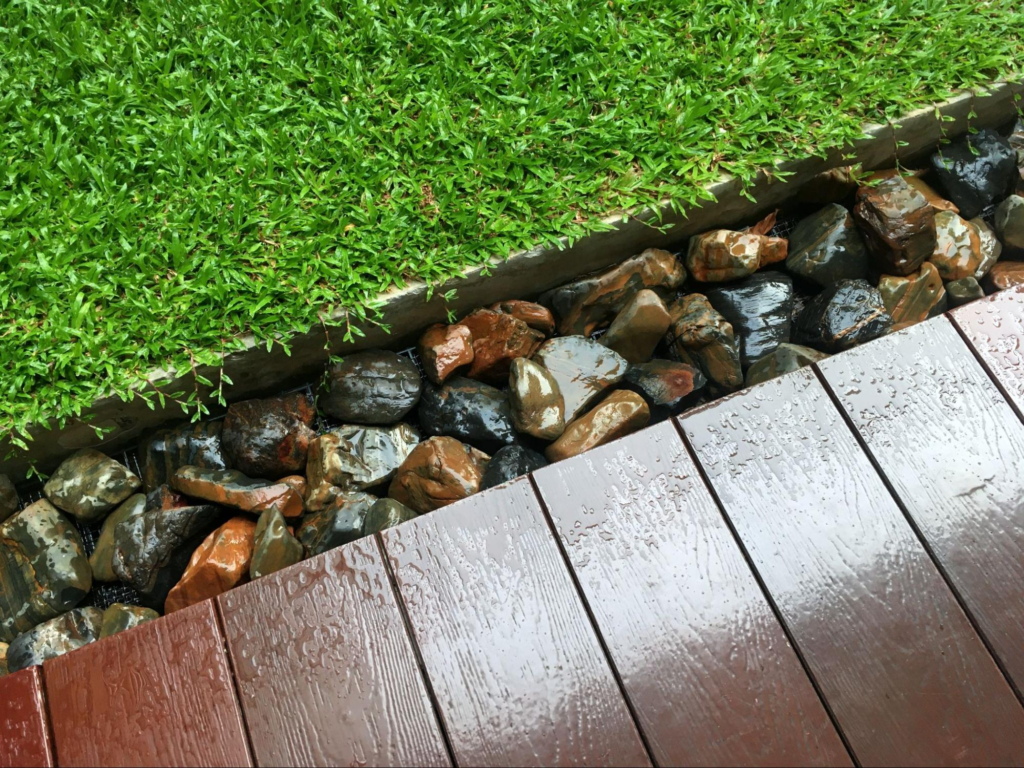
Landscaping and Architectural Rip Rap Features
Not every application is high-energy hydraulic control. Landscape uses include dry creek beds, retaining toe protection, and decorative bands that double as weed barriers and drainage paths. Here, more minor, consistent gradations with intense color and texture choices create intentional lines. Keep in mind that rounded decorative rock is aesthetic, not structural; if erosion control is the job, angular rip rap belongs in the mix.
Rip Rap Installation Details That Decide Success
Even the right stone fails if details are skipped. Subgrade preparation removes organics and soft pockets; filter fabric or a graded filter prevents soil migration; and the toe and sides are buried or keyed to lock edges. Place rock from the bottom up, avoiding segregation so large pieces don’t roll to the toe while fines accumulate at the top. Uniform thickness and slope coverage keep loads distributed.
Underlayment Stops Piping
A tough, appropriately permeable fabric or well-graded filter prevents soil from washing through the voids while still allowing water to pass.
Embedment Locks the Toe
Burying the lowest course resists undercutting and sliding. A keyed toe is cheap insurance against unraveling during the first high flows.
Maintenance and Expected Lifespan of Rip Rap
With proper sizing and base layers, rip rap is mainly set-and-forget. Inspections after major storms help spot displaced rock, clogged steps at culverts, or undermined toes. Repairs are simple: add stone, reshape the surface, and resecure fabric if exposed. Lifespan is measured in decades, especially when UV-resistant fabric and durable stone are used, and vegetation above the armor helps trap fines without blocking drainage.
Limits of Rip Rap and When Another Solution Fits Better
Rip rap shines when flows are moderate to high and access allows stone delivery. It’s less suitable where soils are extremely fine and piping risk is high without complex filter systems, or where velocities exceed the limits of practical stone sizes. In sensitive habitats or tight urban aesthetics, engineered walls, articulated mats, or living shorelines may align better with project goals.
Fine Soils and High Velocities
Very silty subgrades or jet-like velocities need careful filter design or alternate armoring. Don’t rely on stone alone when the substrate is fragile.
Regulatory or Habitat Constraints
Shoreline rules or fish passage standards may limit hard armoring. Hybrid solutions blend structure with vegetation to meet performance and permitting requirements.
Rip Rap Contractor Selection and Sourcing Tips
Experience matters. Look for crews who can speak to gradation, toe keys, and filter design—not just “dump and spread.” Visit past sites to see how their work held up through a season of storms. Source stone from quarries with consistent breakage characteristics, verify gradation before delivery, and stage rock so the mix you specified ends up in the ground rather than segregated piles.
Rip Rap for Owners and Designers
Define the problem first—wave, wake, current, or concentrated flow—then pick stone size, gradation, and layer details to match. Lock the edges, protect the soil with an appropriate filter, and place the rock deliberately. Do those basics well and rip rap becomes a resilient, low-maintenance shield that earns its keep for decades across shorelines, culverts, ditches, slopes, and landscapes.
Visit our Brady Landscaping & Construction blog to learn more about the purpose of rip rap.
