Every yard has different goals, and the right path depends on how you prioritize speed, cost, and long-term performance. With hydroseeding, you’re applying a slurry of seed, mulch, fertilizer, and tackifier that establishes in place and knits roots into your soil profile from day one. Sod, by contrast, delivers instant color and coverage, but its root system must bridge the cut layer and re-establish before traffic or drought. If you can wait a few weeks for the first mow, hydroseeding builds a lawn adapted to your soil; if you need green immediately for events or listings, sod is hard to beat.
The Cost Curve Often Favors Hydroseeding Over Time
Budget stretches further when you pay for growth rather than for fully grown turf and installation labor. Hydroseeding typically covers large areas at a lower per-square-foot price, letting you allocate funds toward soil prep and irrigation that pay dividends later. Sod’s upfront premium buys instant coverage and erosion protection, but the price differential grows with lot size. Over a full season, the ability to tailor seed blends, reduce repairs, and avoid patch color mismatches gives hydroseeding a quiet financial edge.
Upfront Budget Snapshot
Hydroseeding scales efficiently on big footprints, while sod costs rise in step with farmed turf and handling labor.
Total Cost of Ownership
Fewer replacements, flexible overseeding, and better soil-root integration can reduce year-two and year-three expenses.
Sod Delivers Immediate Green Where Hydroseeding Builds Roots First
A sod lawn looks finished the day it lands, which is ideal for quick curb appeal or controlling dust on busy sites. But that roll-grown turf must fuse with native soil to handle heat, foot traffic, and irrigation gaps. Hydroseeding starts slower above ground, yet its roots expand into the soil profile without a transplant layer, improving drought tolerance and resilience. If patience is an option, the below-surface gains show up in fewer hot-spot failures and more uniform color through stress spells.
Site Prep Sets Outcomes—Soil and Grading For Hydroseeding And Sodding
No installation can overcome poor preparation. A soil test guides lime and nutrient corrections so either method starts on balanced ground. Deep tilling or core cultivation breaks compaction, and final grading shapes positive drainage that prevents puddling and washouts. Because hydroseeding relies on seed-soil contact, raking to a fine, firm surface matters; sod needs a smooth bed so seams sit tight and edges don’t lift. Proper prep is where most “lawn failures” are born—or avoided.
Soil Testing And Amendment
pH and organic matter drive nutrient availability; correct them before you invest in the surface.
Grade And Drainage
A gentle fall away from structures and no low bowls keep roots oxygenated and disease pressure lower.
Watering Schedules For Hydroseeding vs. Sod
Moisture timing changes as roots develop. Hydroseeding appreciates light, frequent watering at first to keep the mulch layer damp without runoff, transitioning to deeper, less frequent soaks as germination completes. Sod needs a heavier initial soak to bond and expel air, followed by moderate, consistent moisture while roots grab into native soil. Overwatering either surface invites disease; under-watering stalls establishment. A smart controller or disciplined schedule prevents both extremes.
Establishment Phase
Aim for consistent surface moisture on hydroseeded areas and strong initial sod soaks to seat the roots.
Pullback And Deep-Soak
Shift to fewer, deeper cycles to train roots down and reduce stress between waterings.
With Hydroseeding, You Choose The Seed Mix
One size rarely fits all microclimates. Hydroseeding lets you blend species for sun, shade, traffic, and water availability, from tall fescues for heat tolerance to cool-season blends that recover from wear. You can also add erosion-control fiber or tackifier on slopes and tweak fertilizer rates by zone. Sod varieties are improving, but matching a farmed cultivar to your exact site conditions can be limiting. Custom recipes meet your yard where it lives.
How Hydroseeding Shines in Erosion Control
Steep banks, new construction cuts, and drainage swales demand coverage that stays put. Hydroseeding’s bonded fiber matrix and tackifiers create a breathable mat that resists wash-off while the seed germinates. On long slopes, adding jute netting or coir blankets over the hydroseed boosts protection without blocking emergence. Sod can work on moderate slopes, but it requires staking and careful watering to avoid slippage until roots lock in.
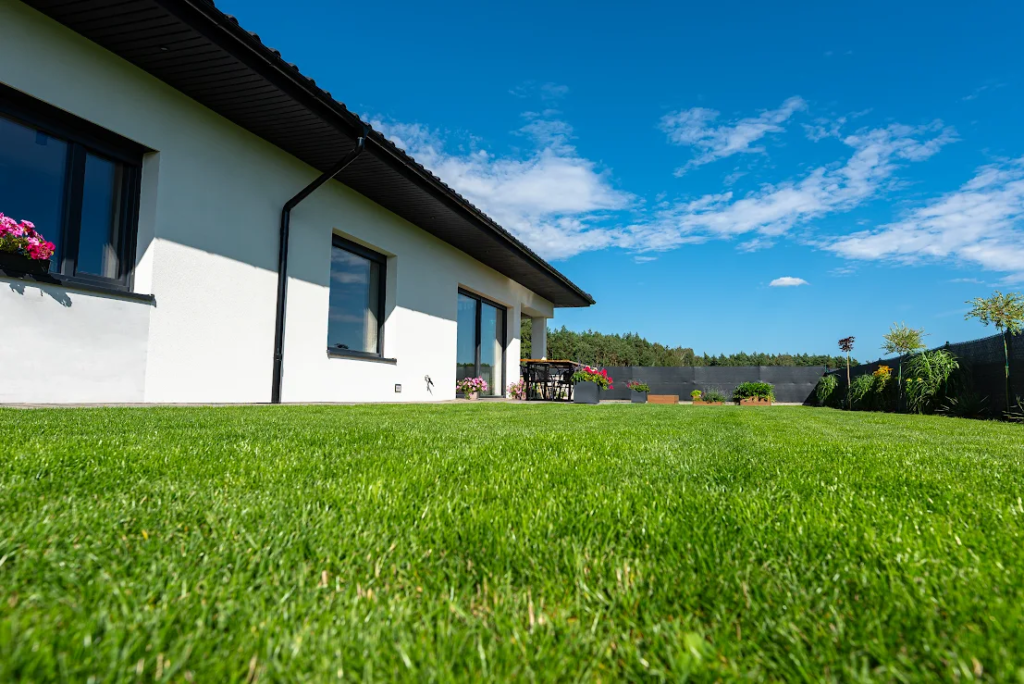
Timing Windows For Hydroseeding In Your Climate
Cool-season regions favor late summer to early fall hydroseeding so seedlings root before winter and wake ready in spring. In warm-season zones, late spring aligns with soil warmth that speeds germination and establishment. Sod offers a broader calendar because it arrives mature, though extremes of heat or freeze challenge any new lawn. Whatever the method, schedule around reliable irrigation and avoid the hottest spell to get fewer touchups.
Mowing, Weeds, And Inputs With Hydroseeding
The first mow sets the tone. For hydroseeded lawns, mow when the stand reaches about one-third higher than your target height, using a sharp blade to avoid tugging tender roots. Sod tolerates earlier mowing, but the “remove only one-third” rule still applies. Pre-emergent timing differs because germinating seed is sensitive; plan weed control strategies accordingly. Over the season, a calibrated fertilization program and periodic overseeding keep color and density consistent.
First Mow Guidelines
Dry blades, sharp edges, and minimal height reduction protect new roots and prevent clumping.
Weed Strategy
Delay certain herbicides on new seedlings; spot-treat early intruders before they set seed.
Materials And Water With Hydroseeding And Sod
Resource use varies by method and management. Hydroseeding’s mulch and fiber inputs are single-use, but local sourcing and recycled cellulose can lower impact. Sod arrives with farm inputs embedded in the product; efficient irrigation and soil health practices balance the ledger after installation. In both cases, healthy soil biology, improved organic matter, and right-sized irrigation cycles reduce the lawn’s footprint far more than the initial choice alone.
Hydroseeding Establishment vs. Sod Stress
Bare patches in a hydroseeded lawn often trace back to uneven moisture or inadequate seed-soil contact; topdressing and spot overseeding usually resolve them quickly. Sod gaps and seam browning point to poor bed prep or insufficient initial soaking; pressing seams and correcting irrigation revive most sections. Disease pressure responds to airflow, mowing height, and watering timing. A short, focused punch list prevents minor issues from recasting the entire project.
Match Goals, Timeline, And Budget Using Hydroseeding Or Sod
Map what matters most: immediate coverage, total cost, customization, slope stability, and your bandwidth for early care. If you value quick curb appeal with minimal waiting, sod provides a reliable, polished look fast. If you want a lawn tuned to microclimates, with strong root integration and flexible costs over larger areas, hydroseeding is compelling. Both approaches reward good soil work and disciplined watering; choose the path that aligns with how you’ll actually maintain the lawn you’re building.
Visit our Brady Landscaping & Construction blog to learn more about the difference between hydroseed and sod.