

Nighttime hazards are most common in areas with uneven or absent lighting. Landscape lighting fills those gaps with consistent, low-glare illumination that clarifies edges, changes in grade, and obstacles. When steps, thresholds, and hose lines are visible, movement becomes confident instead of cautious. The net effect is fewer missteps and a calmer, more welcoming arrival for family and visitors alike.
Where Landscape Lighting Prevents Missteps
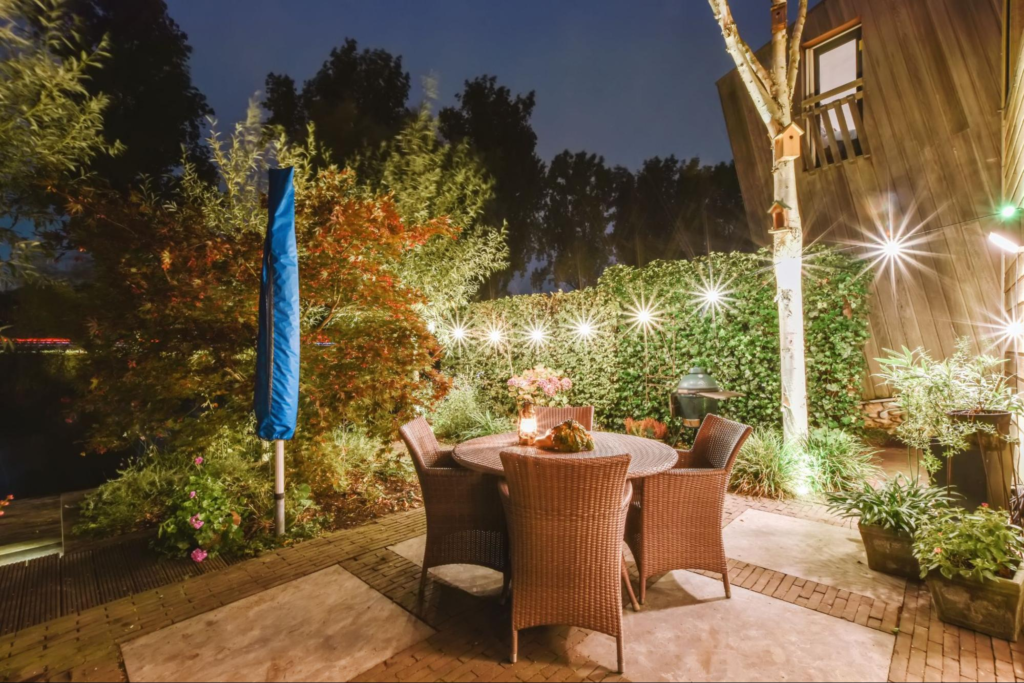
Transitional zones are where falls happen: from the sidewalk to the stoop, the garage to the mudroom, the patio to the yard. Landscape lighting assigns each zone a purposeful glow so depth, texture, and direction remain clear after dark. Materials like pavers and stamped concrete show their contours, making it easier to judge footing. That clarity is safety you can feel with every step.
Edge Definition Matters
Soft, shielded fixtures outline borders so foot placement is intuitive and secure.
Contrast Beats Brightness
Even, layered light reveals texture without harsh hotspots that hide hazards.
Entrances Communicate Security With Landscape Lighting
Front doors and side entries should look active and observed at all hours. Thoughtful landscape lighting removes the shadow pockets that can attract the wrong kind of attention while keeping glare off the door viewer and glass. Mail carriers, deliveries, and guests can see house numbers and hardware instantly. A bright, balanced entry says the home is cared for—and that someone is paying attention.
Motion Sensors and Timers Paired With Landscape Lighting
Static light helps, but adaptive control makes it smarter. Timers keep a baseline glow at sunset while motion triggers provide a momentary bump when movement is detected. In combination with landscape lighting, these controls both conserve energy and signal occupancy patterns that deter opportunistic intrusions. The transition feels natural to occupants yet noticeable to would-be trespassers.
Timed Routines Simplify Nights
Schedules align with sunset, so the exterior is ready before it gets dark.
Motion as a Signal
A brief, automatic brightening draws attention and discourages loitering.
Shielded, Glare-Free Landscape Lighting Improves Visibility
Seeing clearly isn’t about maximum lumens; it’s about the right light in the right place. Well-designed landscape lighting uses fully shielded fixtures and warm color temperatures to reduce glare that blinds rather than guides. When your eyes stay adapted, you can scan the yard, notice movement, and identify faces at a distance. Better visual comfort translates directly into better situational awareness.
Aim Light, Don’t Spill It
Cutoff optics place beams on paths and walls, not in neighbors’ windows or the night sky.
Choose the Right Color
Warmer LEDs reduce pupil constriction and improve depth perception in low light.
Smart Controls Bring Landscape Lighting Into Your Routine
Security works best when it’s effortless. App-based scenes, dusk-to-dawn sensors, and geofencing make landscape lighting respond to your patterns without constant adjustment. You can boost brightness for parties, dim late at night, or schedule a vacation mode that mimics occupancy. These small automations multiply the safety benefits without adding daily tasks.
One-Tap Scenes
Preset “arrival” and “overnight” levels tailor light to the moment in seconds.
Remote Check-Ins
If you forget, you can confirm the status or trigger a scene from anywhere.
How Landscape Lighting Guides Sightlines
Eyes follow light. By layering path lights, step markers, down-lighting from trees, and subtle wall washes, landscape lighting creates visual cues that lead guests toward entries and away from hazards. Highlighting vertical surfaces helps with depth judgment and identification, while low, shielded grazes keep the ground legible. The composition is attractive, but its purpose is wayfinding and safety first.
Durable Fixtures Mean Landscape Lighting Performs in All Weather
Security gains disappear if fixtures fail. Marine-grade metals, powder-coat finishes, and sealed housings help landscape lighting resist rain, sprinklers, and coastal air. Proper installation with die-cast stakes and shielded wiring keeps connections stable and corrosion at bay. Reliability ensures that the lights you depend on for safety are there when a storm hits or frost settles.
Build for the Climate
Choose materials that match freeze-thaw cycles, salty air, or high heat.
Protect the Connections
Heat-shrink and gel-filled connectors prevent shorts that darken a run.
Energy Use Stays Low When Landscape Lighting Uses LEDs
Safety shouldn’t require a steep power bill. High-efficiency LED sources deliver useful lumens with minimal wattage and far longer lifespans than legacy lamps. That efficiency enables broader coverage at responsible energy levels, so you can light every critical zone without compromise. Lower maintenance means fewer dark patches from burned-out bulbs, too.
Efficiency With Purpose
Lumens per watt matter—but so does placing them where they help most.
Long Life, Fewer Gaps
Extended LED life reduces outages that create unsafe shadows.
Professional Design Ensures Landscape Lighting Meets Local Rules
Good lighting is compliant lighting. Pros understand setbacks, glare codes, and dark-sky guidelines that govern landscape lighting in many communities. They’ll choose optics and mounting heights that protect neighbors and preserve night skies while enhancing your site. Design that respects regulations keeps projects smooth—and keeps the focus on safety and security outcomes.
Dark-Sky Friendly Choices
Full cutoff fixtures and warmer tones reduce skyglow without sacrificing clarity.
Light Only What You Use
Zoning separates entertainment, path, and perimeter areas for targeted control.
Ongoing Care Keeps Landscape Lighting Performing Like Day One
Even the best system needs occasional tune-ups. Seasonal plant growth can block beams, fixture lenses collect dust, and shifting soil can tilt stakes. A quick maintenance pass realigns heads, cleans lenses, and verifies timers so the safety benefits remain consistent. When light remains predictable, so does peace of mind.
Inspect the Beam Paths
Trim foliage that shadows steps, numbers, or cameras.
Refresh the Schedule
Recalibrate timers as daylight hours change to avoid dark gaps.
Landscape Lighting That Pays Back Night After Night
The best security upgrades are the ones you actually notice in daily life. Landscape lighting smooths every arrival, clarifies every step, and signals a cared-for home to anyone passing by. It’s a subtle layer that enhances cameras and locks by preventing problems before they start. Night after night, that reliability is the difference between hoping you’ll be safe and feeling that you are.Visit our Brady Landscaping & Construction blog to learn more about the value of proper landscape lighting.
